Neil Peart`s History
How He Started Drumming
As a young boy growing up in St. Catharines, Ontario, Neil fell deeply in love with music by listening to a small transistor radio. Long before he had real instruments, he began rhythmically destroying household objects, using chopsticks and old kitchen utensils to drum on furniture, baby formula boxes, and his own knees.
Seeing his immense passion, his parents gave him a pair of drumsticks, a practice pad, and lessons with local teacher Don George for his 13th birthday. His parents made a deal with him: if he practiced diligently on that pad for one full year, they would buy him a real drum kit. Neil kept his end of the bargain completely focused, practicing for hours every day.
His First Drum Kit: The Red Sparkle “Stewart”
For his 14th birthday, his parents fulfilled their promise and bought him his very first kit: a three-piece, red sparkle “Stewart” drum outfit that cost roughly $150 at the time.
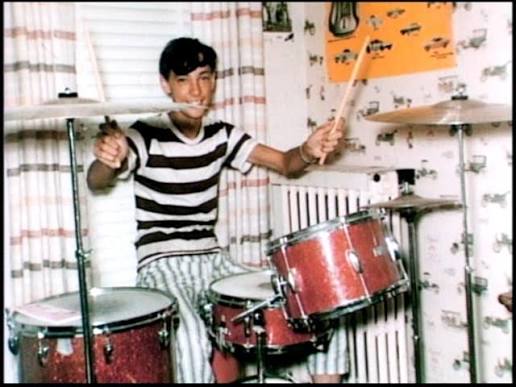
- The Blueprint Layout: It was an entry-level, Japanese-made kit consisting of just a bass drum, a snare drum, one small rack tom, and a single tiny Ajax cymbal.
- His First Custom Mod: Ever the innovator, a young Neil quickly customized the kit by trading a friend for a marginally bigger 18″ Capri bass drum. He also used black electrical tape to fashion a custom “racing stripe” running down the front of the bass drum head to make it look cooler.
- The Practice Ritual: Neil later recalled in his autobiography, Traveling Music, that the day the drums arrived was one of the most exciting days of his life. He immediately set them up in the front living room and played the only two songs he knew over and over again: “Wipeout” and “Land of a Thousand Dances.” It was on this exact red-sparkle Stewart kit that he played his first-ever public concert and drum solo during a high school variety show at age 15. His First Major Pro Kit: “Chromey” While the Stewart kit was his personal first, it is also worth noting his first professional touring kit. When he auditioned for and joined Rush in late July 1974, he used his Mercury Records advance money to walk into a Long & McQuade music store in Toronto and buy a Chrome-finished Slingerland double-bass kit. Nicknamed “Chromey,” this iconic kit was used to record legendary early albums like Fly by Night and 2112, serving as the true structural blueprint for the massive 360-degree drum architectures he would build later in his career.
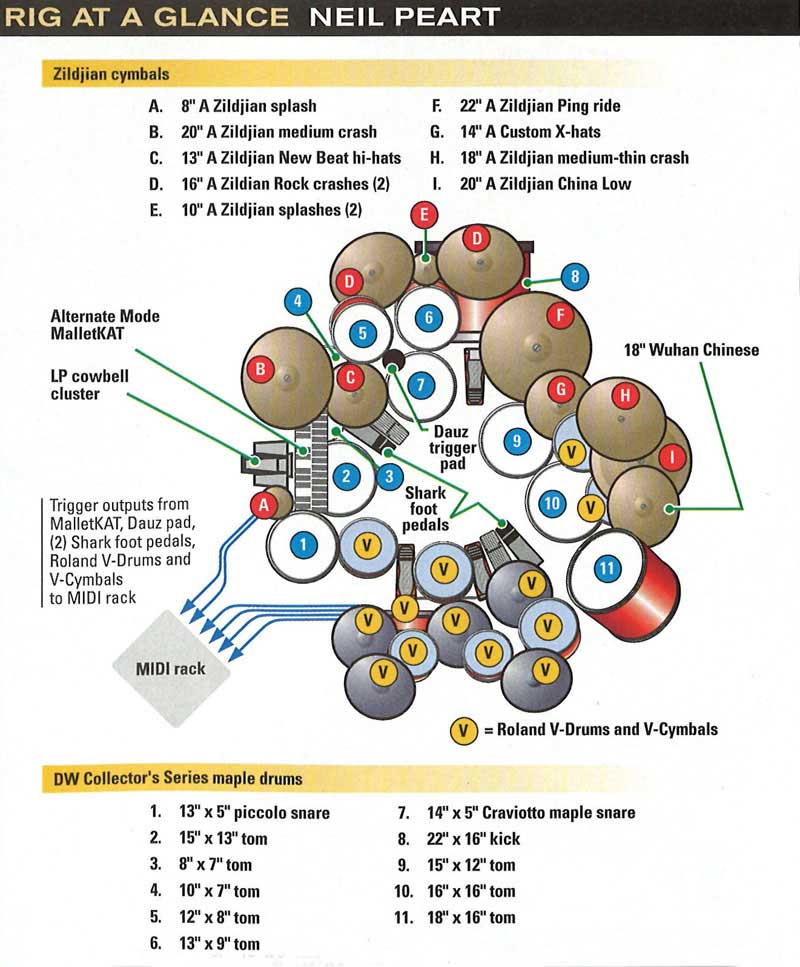
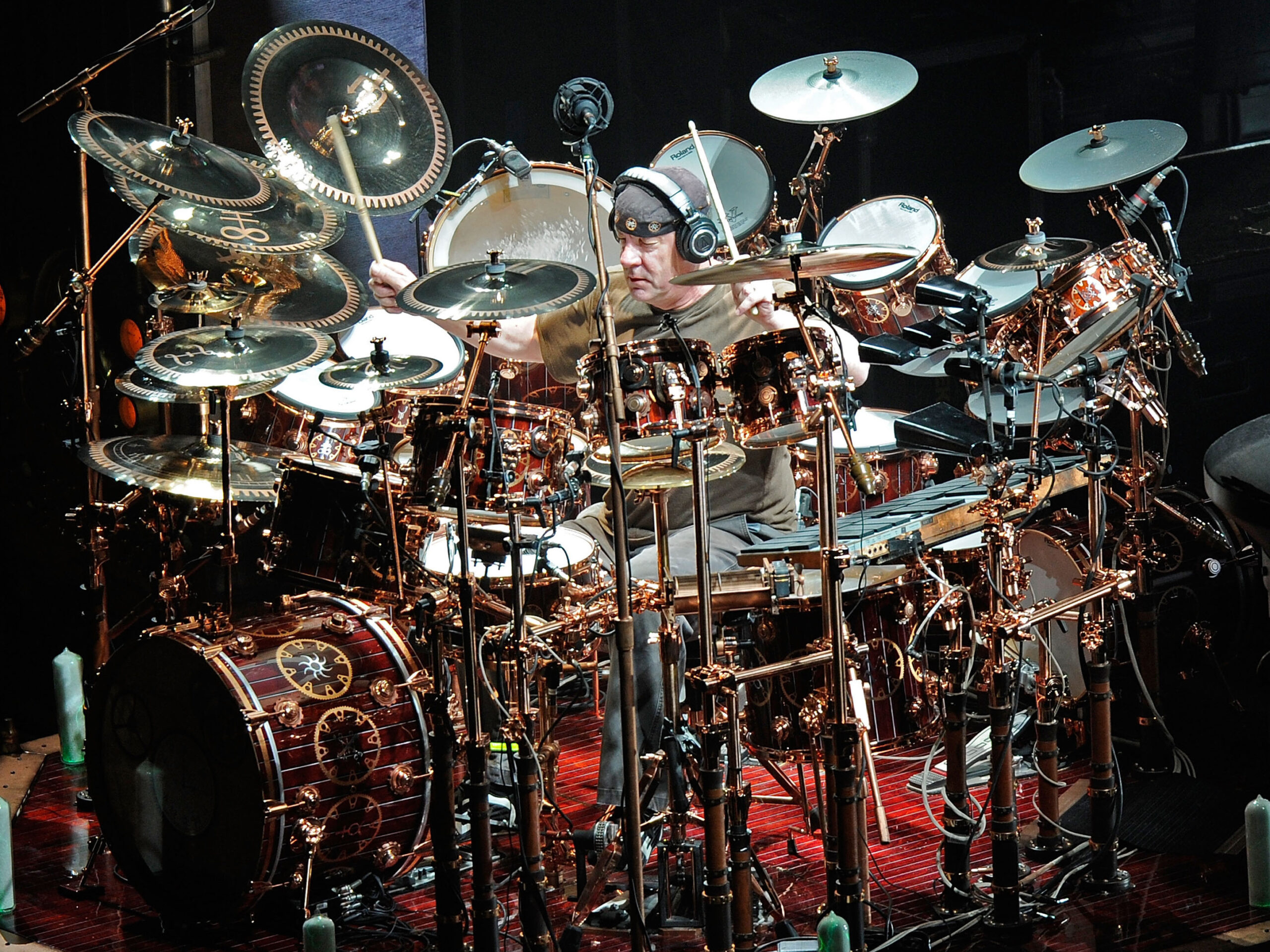
DW Drum Set Up